Corn Snake
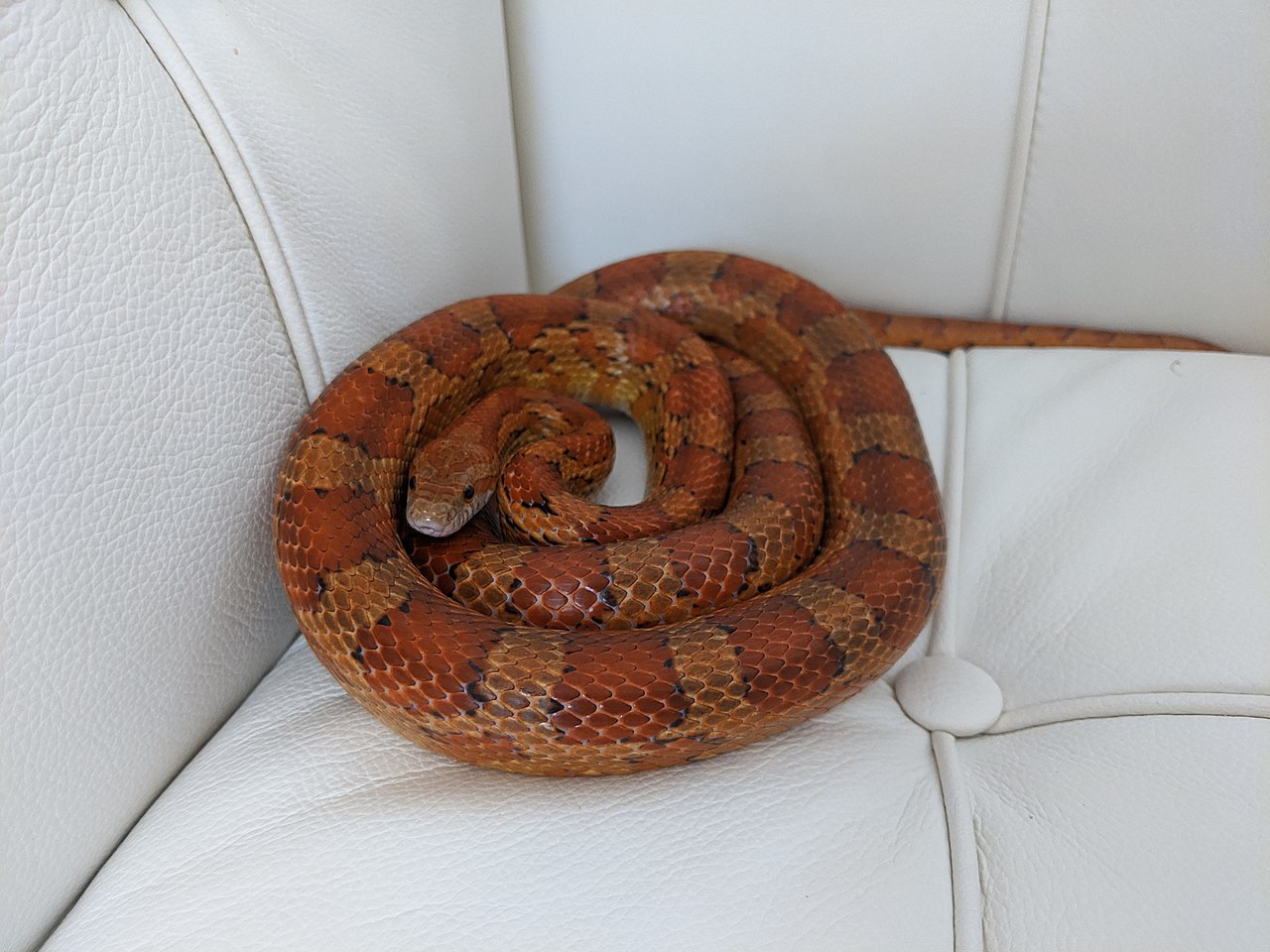
Pantherophis guttatus
A hardy North American colubrid that is active, alert, and feeds reliably. Corn snakes are widely considered the best first snake for new keepers.
Overview
Corn snakes (Pantherophis guttatus) are slender, non-venomous colubrids native to the southeastern United States. They typically reach 4-5.5 feet as adults and live 15-20 years in captivity. Their reliable feeding response, calm temperament, and tolerance of a wide range of conditions make them one of the best beginner snakes available.
Enclosure
An adult corn snake needs at least 4 x 2 x 2 feet of enclosure space, with secure lids and locks since they are accomplished escape artists. Provide multiple hides, climbing branches (corn snakes are semi-arboreal as juveniles), and clutter for security. Aspen shavings, cypress mulch, or paper substrate all work. Avoid cedar or pine, which release harmful oils.
Temperature and humidity
Set a warm side of 85-88F and a cool side of 72-78F, with a nighttime drop into the upper 60s tolerated well. Humidity should stay around 40-60%, slightly higher during sheds. Always use a thermostat to regulate heat sources. UVB is not strictly required but low-output UVB can support overall wellness.
Diet
Feed appropriately sized frozen-thawed mice. Hatchlings eat every 5-7 days; sub-adults every 7-10 days; adults every 10-14 days. Corn snakes are aggressive feeders and rarely refuse food. Do not feed prey wider than the snake's thickest point.
Handling and temperament
Corn snakes are alert and curious. Hatchlings can be flighty and may musk or nip but calm quickly with regular gentle handling. Adults are typically very tractable. Wait 48 hours after a meal before handling.
Common health issues
Common problems include respiratory infections, mites, scale rot from damp substrate, and regurgitation from feeding prey that is too large or handling too soon after eating. Like most colubrids they are generally robust.
Vet care disclaimer
This guide is for general reference only. Always consult a qualified exotic veterinarian for medical care or specific husbandry advice.