Ball Python
Python regius
A docile, slow-moving constrictor from West Africa. Ball pythons stay manageable in size (3-5 ft) and tolerate handling well, making them one of the most popular pet snakes.
Overview
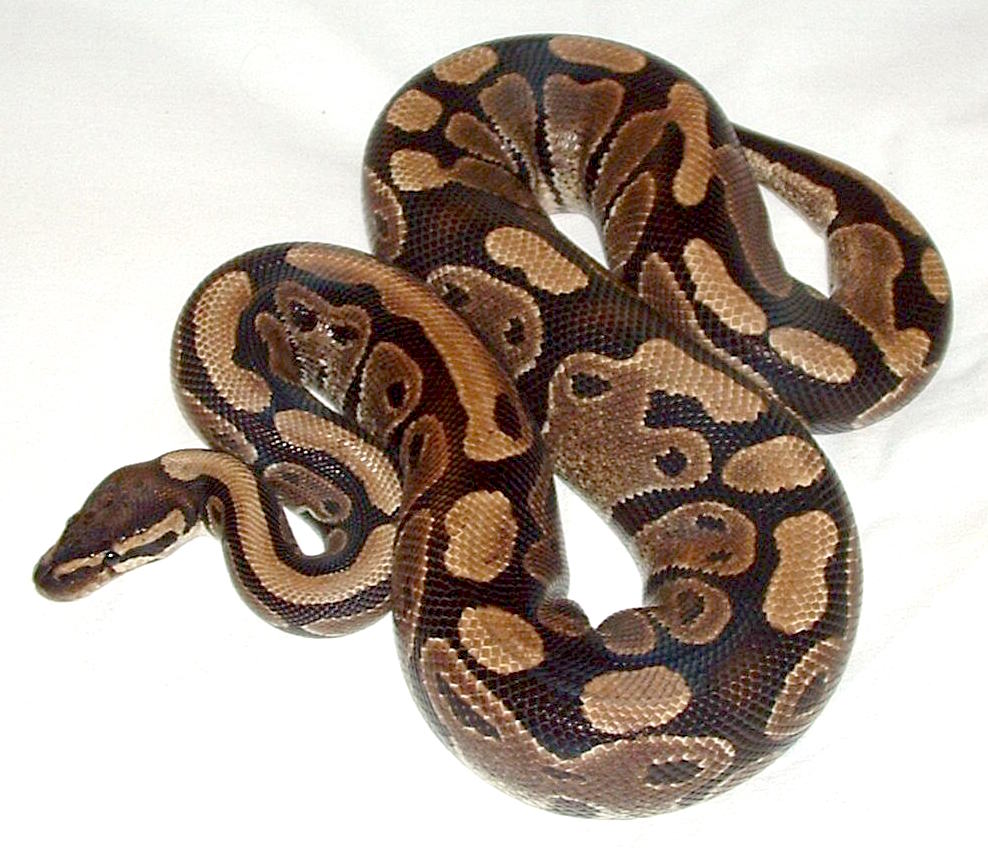
Ball pythons (Python regius) are a small-to-medium constrictor native to the savannas and grasslands of West and Central Africa. They earn their name from the defensive ball they curl into when stressed. Adults typically reach 3-5 feet, with females usually larger than males, and can live 25-30 years or more in captivity with proper care.
Enclosure
A single adult ball python should be kept in an enclosure with at least 4 x 2 x 2 feet of floor space; larger is always better. Front-opening PVC or sealed wood enclosures hold heat and humidity far better than screen-top glass tanks. Provide at least two snug hides (one on the warm side, one on the cool side), climbing branches, and clutter. Suitable substrates include cypress mulch, coconut husk, or a bioactive mix.
Temperature and humidity
Maintain a thermal gradient with a warm side around 88-92F (basking surface) and a cool side near 75-80F. Nighttime can drop to the low 70s. Humidity should sit between 55-70%, with a brief bump to 70-80% during shed cycles. Always use a thermostat-controlled heat source and verify temperatures with a digital probe thermometer, not stick-on dials.
Diet
Feed appropriately sized frozen-thawed rodents (no larger than the widest part of the snake). Hatchlings eat every 5-7 days; sub-adults every 10-14 days; adults every 2-4 weeks. Ball pythons are famous for hunger strikes, especially in winter and during breeding season. A healthy adult skipping a meal or two is not an emergency.
Handling and temperament
Ball pythons are slow-moving and generally tolerant of handling. Wait 48 hours after feeding before handling. Support the snake's body fully and avoid sudden movements. Most settle within a few sessions if approached calmly.
Common health issues
Watch for respiratory infections (wheezing, mucus, open-mouth breathing), scale rot from over-wet conditions, mites, and stuck sheds caused by low humidity. Inclusion Body Disease (IBD) and Nidovirus have been documented in pythons; quarantine new animals for at least 90 days.
Vet care disclaimer
This guide is for general reference only. Always consult a qualified exotic veterinarian for medical care or specific husbandry advice.
Watch videos about this species